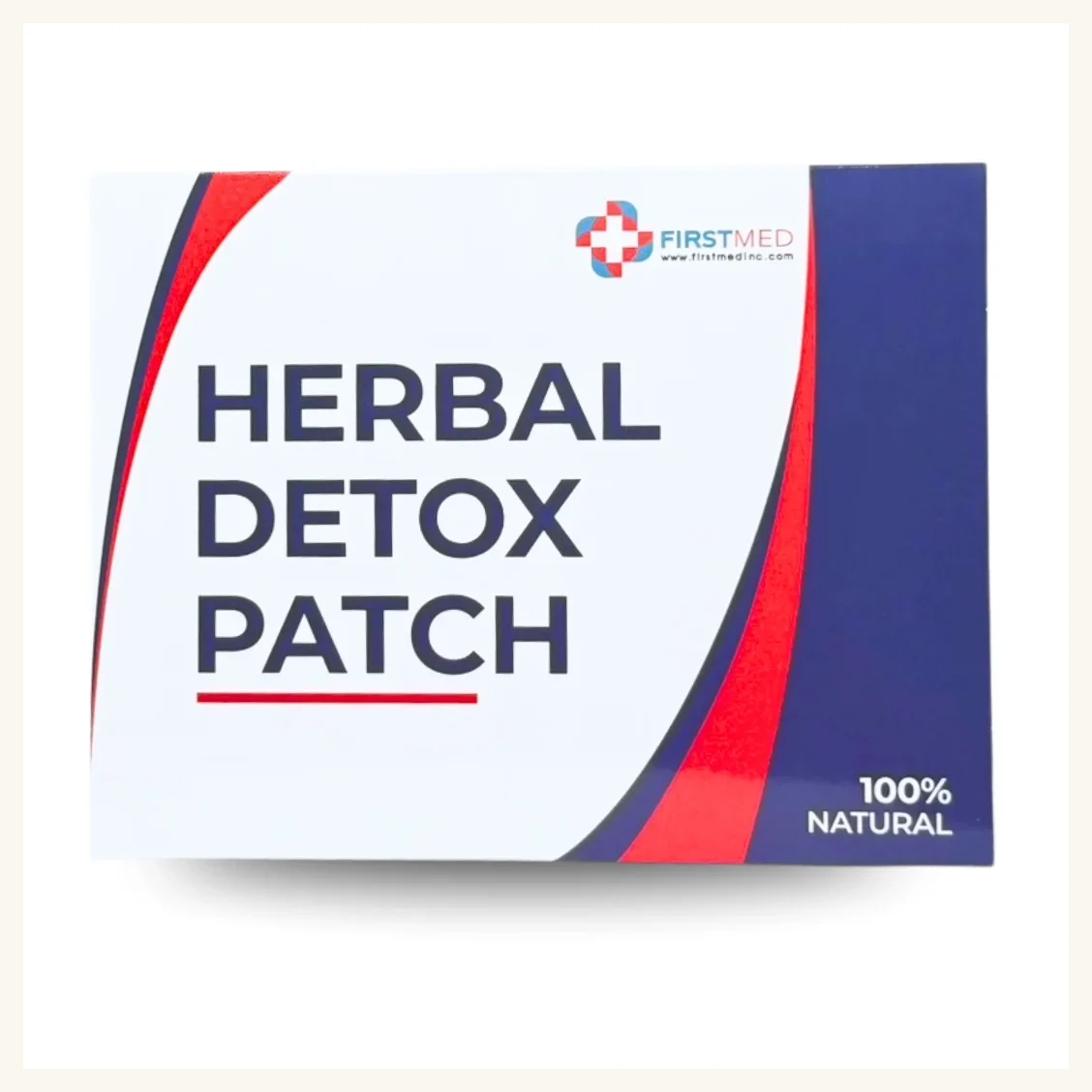
Patch boxes vary a lot in how much they tell you. Some show a full ingredient list, a stated nicotine amount and explicit warnings. Others lead with marketing language and make you work to find the basics. A minute with the label before you buy tells you most of what you need to know, and highlights the questions to ask if something is missing.
1. The nicotine amount per patch
The most important figure on any nicotine patch label is how much nicotine each patch delivers. This should appear as a specific number in milligrams: 7 mg, 14 mg, 21 mg. Our patch contains 7 mg per patch from natural tobacco extract.
Without a milligram figure, you have no basis for comparing products. Marketing language like "standard strength" or "full dose" is meaningless without the number behind it, because there is no universal standard for what those phrases mean across brands.
Some pharmacy patches express their nicotine content as a delivery rate over time, for example a stated hourly or daily release figure. This is the rate at which nicotine exits the patch and becomes available for absorption, not necessarily the total amount loaded into the patch. Both figures are informative; the per-patch content is the simpler comparison point.
If you cannot find a specific milligram value on the outer box, check the back label, the insert inside the box, or the manufacturer's product page. If it still does not appear, you are looking at a product that has not disclosed its nicotine content in a straightforward way.
2. The full ingredient list
Every ingredient in the patch should be named. This means both the active ingredient, nicotine or its named source, and the inactive ingredients: the adhesive, the backing film, any carrier substances, and any botanical additions.
Words like "blend", "complex" or "proprietary formula" used without a list underneath are a warning sign. They indicate the manufacturer is not disclosing all components. In a product you wear on your skin for hours, knowing what you are applying matters.
For a herbal patch, the botanical ingredients should be individually named. "Herbal extract" as a single entry covers nothing. The specific plants should appear: resveratrol or grape skin extract; liquorice root or Glycyrrhiza glabra; clove or Syzygium aromaticum. The name should be specific enough to look up.
Our label names all four ingredients: natural tobacco extract, resveratrol, liquorice root and clove. These are the complete active components of the patch alongside the delivery matrix.
Active and inactive ingredients
On a regulated medicine like a pharmacy nicotine patch, the label distinguishes active from inactive ingredients. The active ingredient is nicotine; the inactive ingredients are everything else used to construct the patch. This convention exists because regulatory approval covers the active ingredient specifically.
Herbal patches are typically labeled as consumer products rather than medicines, so the active and inactive distinction may not appear in the same form. Instead, you may see a full ingredient list without that categorisation. That is not itself a problem. What matters is that every ingredient is named.
Inactive ingredients are not unimportant. The adhesive determines how well the patch stays on different skin types in different conditions. The carrier substances affect the feel of the patch and its flexibility. If you have known sensitivities to particular substances, the inactive ingredient list is where you would check for them.
3. The count and the directions
Check how many patches are in the box before assuming the price is what it appears. A box of 7 patches looks cheaper than a box of 30 until you divide by count. One patch a day and 30 per box is a one-month supply at a single daily application. Our box contains 30 patches at $15, which works out to $0.50 per patch per day.
Calculating the per-patch cost across competing products puts them on a consistent footing regardless of box size. Box price divided by patch count equals the cost per day at one-patch-per-day usage. This is the number to compare.
The directions should tell you where to apply the patch, how long to wear each patch, and how often to replace it. Suitable application sites are typically on clean, dry, hairless skin on the upper arm, chest, back or shoulder. If the directions say wear for up to 24 hours and the count is 30, that is 30 days' use per box.
Patch rotation and skin care
Good directions include guidance on rotating the application site. Wearing a patch repeatedly on exactly the same small area can cause localised skin irritation from the adhesive. Standard guidance is to move the site each day and allow at least a week before returning to the same location.
The label should also tell you how to remove the patch and what to do with it afterward. Used patches retain residual nicotine and should be disposed of carefully, folded adhesive-side together and placed out of reach of children and pets before discarding.
4. The warnings
A responsible nicotine patch label tells you clearly who should not use the product without medical advice. Standard warnings cover pregnancy and breastfeeding, heart disease and circulatory conditions, and use by children and young people.
The warning section should also address what to do if the patch causes an adverse reaction, and what signs of nicotine excess to watch for. Knowing what the label says about limits and contraindications is basic product safety information.
If a label carries no warnings at all, treat that as a gap rather than a reassurance. Any nicotine-containing product should carry explicit safety information.
5. Storage and handling
Most nicotine patches should be stored below a specific temperature, typically around 25 degrees Celsius, and away from direct sunlight. Heat can affect the adhesive and alter the delivery matrix over time. A label that gives storage conditions is providing information you need to maintain the product's integrity.
Individual patches are usually sealed in foil sachets inside the outer box. Once a sachet is opened, the patch should be applied immediately rather than left exposed. A patch that has been folded or has lost its adhesion should be discarded rather than used. A patch that does not maintain full skin contact may not deliver its contents consistently.
Check the expiry date on the box before purchasing. Patches past their expiry may have altered adhesive properties or ingredient concentrations. The date is usually printed on the bottom or back of the outer carton.
6. The manufacturer or distributor
A legitimate product label includes the name and address, or at minimum the country of origin, of the manufacturer or responsible distributor. This tells you who is accountable for the product you are buying and where to direct a query or complaint if something is wrong.
Some products sold online lack this information or provide only an email address without a physical location. That is not sufficient. You should be able to identify who made the product and hold them accountable if the product does not match what the label describes.
Our patches are distributed by FirstMedInc. Contact details are available at herbalnicotinepatches.com.
Wording to look twice at
"Natural" and "herbal" describe ingredients, nothing more. They are not quality marks, safety certifications or evidence of any particular effect. Read them as a prompt to check the ingredient list, not as an answer to what the product contains.
"Advanced formula" and "premium blend" are marketing descriptions with no defined meaning. If a label leans on this kind of language without listing what the formula or blend contains, the emphasis is on impression rather than information.
"100% natural" does not mean anything specific unless you can see all the ingredients and verify that each one comes from a natural source. The claim is unverifiable without a full ingredient list to examine.
Claims about certifications, independently tested status or clinical backing should come with specifics: the name of the certifying body, the test performed, the publication where the clinical data appears. A claim without a traceable reference is an assertion, not evidence.
A worked example: what our label shows
For reference, our label shows: four named ingredients (natural tobacco extract, resveratrol, liquorice root and clove), the nicotine content per patch (7 mg from natural tobacco extract), the patch count (30 per box), the recommended wear time (one patch per 24 hours), storage conditions, warnings including contraindications and disposal guidance, and the distributor name.
Running the same checklist against any other product's label lets you assess it on a consistent basis. Does it state a milligram figure? Are all ingredients individually named? Is the count clear? Are warnings present? If any of those four fail, you know what to ask about before buying.
Nicotine per patch
A specific milligram figure. Ours: 7 mg from natural tobacco extract.
Every ingredient named
No unexplained blend. Ours: tobacco extract, resveratrol, liquorice root and clove.
Count and wear time
A clear patch count and a stated wear period. Ours: 30 per box, one patch per 24 hours.
Warnings
Who should not use it without advice, and what to do after a reaction. Check for both on any box, ours included.